The hotel room occupancy problem
Hotels lose money two ways on room sensing: energy waste when HVAC runs in empty rooms, and guest complaints when PIR-based occupancy sensors falsely report "vacant" and shut off lights while a guest is reading or sleeping.
The root cause is that PIR sensors only detect gross movement. A guest sitting still or sleeping generates little infrared change, so PIR-based hotel room motion sensors trigger "vacant" after 1-3 minutes of stillness — cutting lights and HVAC while the guest is still there.
Why mmWave solves it
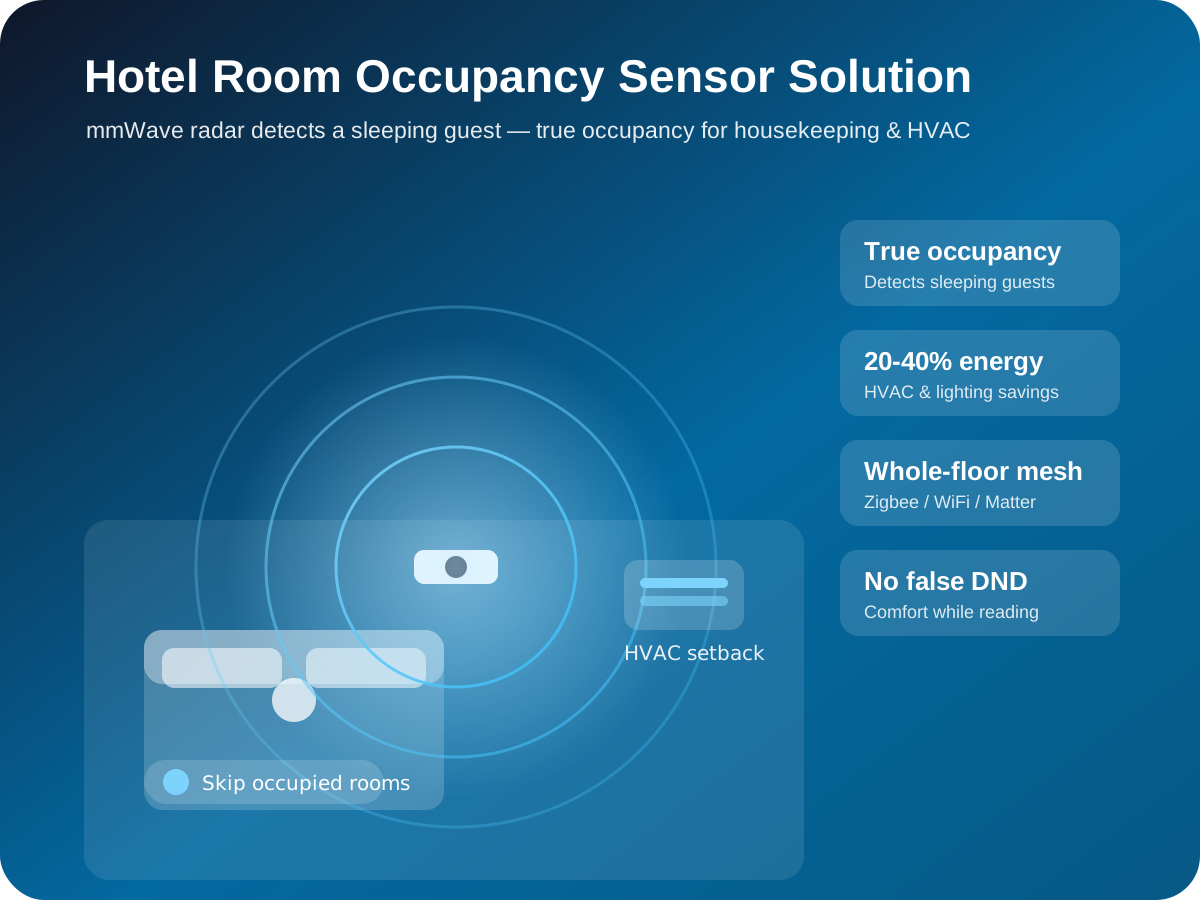
Our mmWave radar presence sensors detect true human presence — including the micro-motion of breathing. A sleeping or seated guest is detected as "occupied" until they actually leave the room. This eliminates false-vacant triggers and the guest complaints they cause.
mmWave also solves a second PIR problem: temperature sensitivity. PIR sensors detect infrared heat changes, so in summer when ambient temperature approaches body temperature, PIR false-positive rates spike dramatically. mmWave radar is unaffected by ambient temperature — the presence sensor performs identically at 5°C and 35°C. This makes mmWave presence sensors the reliable choice for hotels in tropical and desert climates where PIR-based hotel room motion sensors fail seasonally.
| Parameter | Value | Competitor typical |
|---|
| Frequency band | 24GHz (wideband) | 5.8GHz single-frequency |
| Max motion detection | 10m | 6–8m |
| Max micro-motion / static detection | 2.5m | ≤1.5m |
| Breathing detection | Supported | Rare |
| Detection angle | 120° | 90–100° |
Most mmWave radar presence sensors on the market have a micro-motion detection range of 1.5m or less — too short to reliably detect a guest sleeping in a queen-size bed. Our presence sensor detects micro-motion at 2.5m, covering the full bed area from a standard 3m ceiling height. The 10m motion range covers any standard hotel room from a single ceiling presence sensor. The 120° field of view provides full room coverage when ceiling-mounted.
Hotel room motion sensor use cases
Housekeeping scheduling
Real-time room occupancy lets housekeeping staff skip occupied rooms and prioritize vacated ones. No more knocking on occupied rooms or waiting in corridors — the system shows which rooms are ready for cleaning.
HVAC energy saving
Setback HVAC and lighting the moment a guest leaves, not after a fixed 15-minute timer. Hotels typically cut room energy cost 20-40% with true occupancy-based control, because the system reacts to actual departure within seconds rather than guessing with a timer.
Do-not-disturb intelligence
Combine the occupancy sensor with a door sensor: if the room is occupied and the door is closed, the system can show "Do Not Disturb" on the housekeeping dashboard — without requiring the guest to press a button or hang a sign.
Vacation rental auto check-out
For short-term rentals, the presence sensor detects when guests have left and triggers check-out: lock the door, turn off HVAC, notify the cleaning team. No more guessing whether guests have departed.
Door sensor + presence sensor: the complete hotel room solution
The presence sensor is the core of hotel room occupancy detection, but the complete guest experience needs a door sensor too. Our solution combines:
- Ceiling presence sensors (2 per room): one in the bedroom, one in the bathroom — both flush-mount to the ceiling and detect true occupancy via mmWave radar.
- Door magnetic sensor: a tiny (2×4cm) wireless sensor mounted on the room door, powered by the door lock's battery — no separate power supply, no wiring, compatible with any door lock brand.
How the combination works
- Guest opens the door → door sensor triggers → lights turn on instantly. The guest enters a welcoming room, not a dark one.
- Guest is in the room → presence sensor confirms occupancy (even if sleeping) → HVAC stays at comfort temperature, lights stay on.
- Guest leaves → presence sensor detects vacancy → after a short confirmation delay, HVAC sets back, lights turn off.
- Door opens again → door sensor triggers → lights on, HVAC restores — the cycle repeats.
This "door open = lights on, presence = occupied, vacancy = energy saving" logic is the gold standard for hotel room automation. The door sensor handles the instant response (no waiting for radar to detect entry), and the presence sensor handles the sustained occupancy detection (no false vacant while sleeping).
Door sensor specifications
| Parameter | Value |
|---|
| Size | 2×4cm (ultra-compact) |
| Power | Door lock battery powered (no separate supply) |
| Compatibility | Any door lock brand |
| Configuration | None required — power on and use |
| Installation | Adhesive or screw mount, 2-minute install |
| Communication | Zigbee 3.0 / WiFi (matches presence sensor protocol) |
The door sensor is designed for zero-friction deployment: it draws power from the existing door lock battery, requires no configuration, and works the moment it is powered on. Its 2×4cm size makes it nearly invisible to guests.
Bundled with the solution, not sold as a standalone retail SKU. The door magnetic sensor and the central controller ship as part of the hotel room power-management package alongside the ceiling presence sensors — they are not listed separately in the product catalog. If you only need presence sensors (no door/room-power control), see our ceiling presence sensor products; if you want the full door-sensor + central-controller room automation, request a project quote and we scope the bundle to your room count.
Multi-room deployment
A standard hotel room uses two ceiling presence sensors (bedroom + bathroom) and one door sensor (entrance door). The bedroom presence sensor covers the sleeping area with 2.5m micro-motion range. The bathroom presence sensor detects occupancy for automated exhaust fan and lighting control. The door sensor provides instant entry/exit detection. All three devices join the same Zigbee mesh or WiFi network, reporting to the building management system as a unified room status.
Protocol options for hotel deployment
| Protocol | Best for | Scale |
|---|
| Zigbee 3.0 | Whole-floor hotel deployment with mesh reliability | 100+ rooms per floor |
| WiFi 2.4GHz | Retrofit hotels without Zigbee gateway infrastructure | 1-50 rooms |
| Matter over Thread | Premium hotels with Apple Home / Google Home integration | Future-proof tier |
All three protocols use the same mmWave radar detection core. The difference is the radio — choose based on your hotel's existing network infrastructure and ecosystem.
Installation
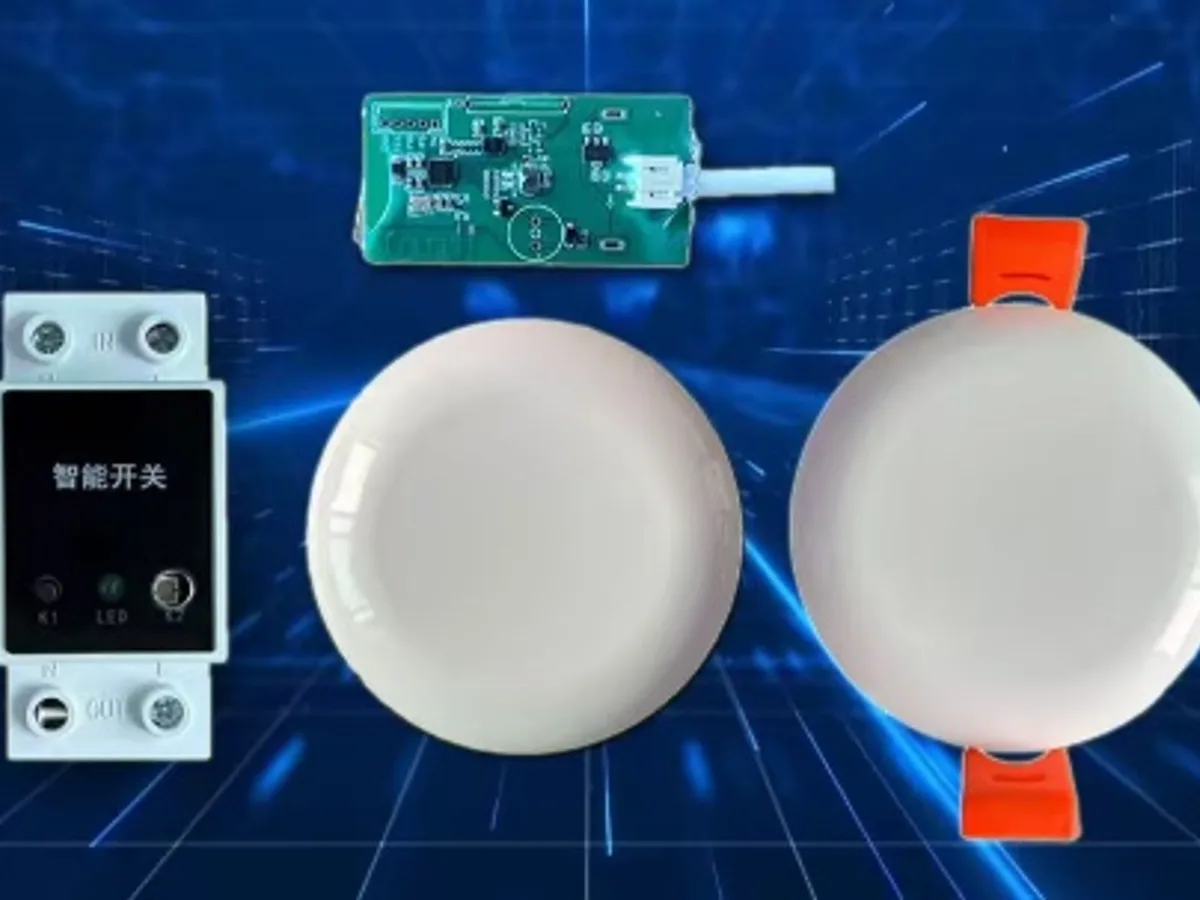
The hotel room motion sensor flush-mounts into a standard ceiling cutout. DC5V low-voltage input simplifies OEM integration into powered fixtures or battery-backed building systems. For retrofit projects, each sensor ships with a DC5V power adapter.
A single ceiling sensor covers a standard hotel room (up to 10m motion, 2.5m micro-motion, 120° field). For suites or large rooms, two sensors may be used.
From pilot to rollout
- Spec review: confirm room size, ceiling height, protocol, and PMS/BMS integration scope.
- Sampling: 5-10 presence sensors for on-site testing in your target room types.
- Pilot: one floor (20-40 rooms) for 2-4 weeks — measure occupancy accuracy and energy savings.
- Rollout: mass production 7-10 days, FOB Shenzhen, on-site commissioning.
- Support: OEM branding, firmware customization, after-sales warranty.
Certifications
CE, FCC, RoHS, and ISO 9001 certified for direct import into EU and US markets. Every hotel room occupancy sensor ships with compliance documentation.